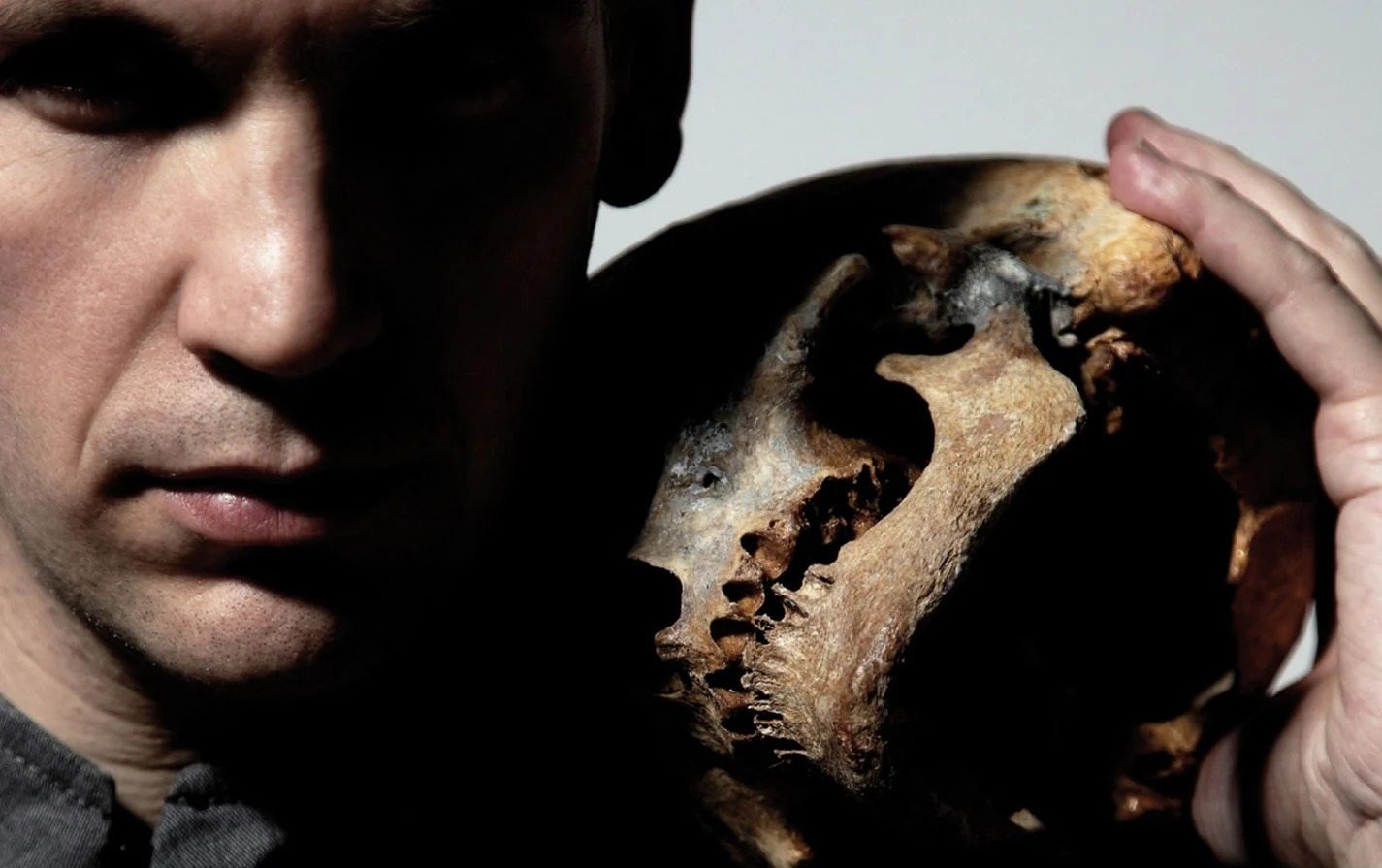
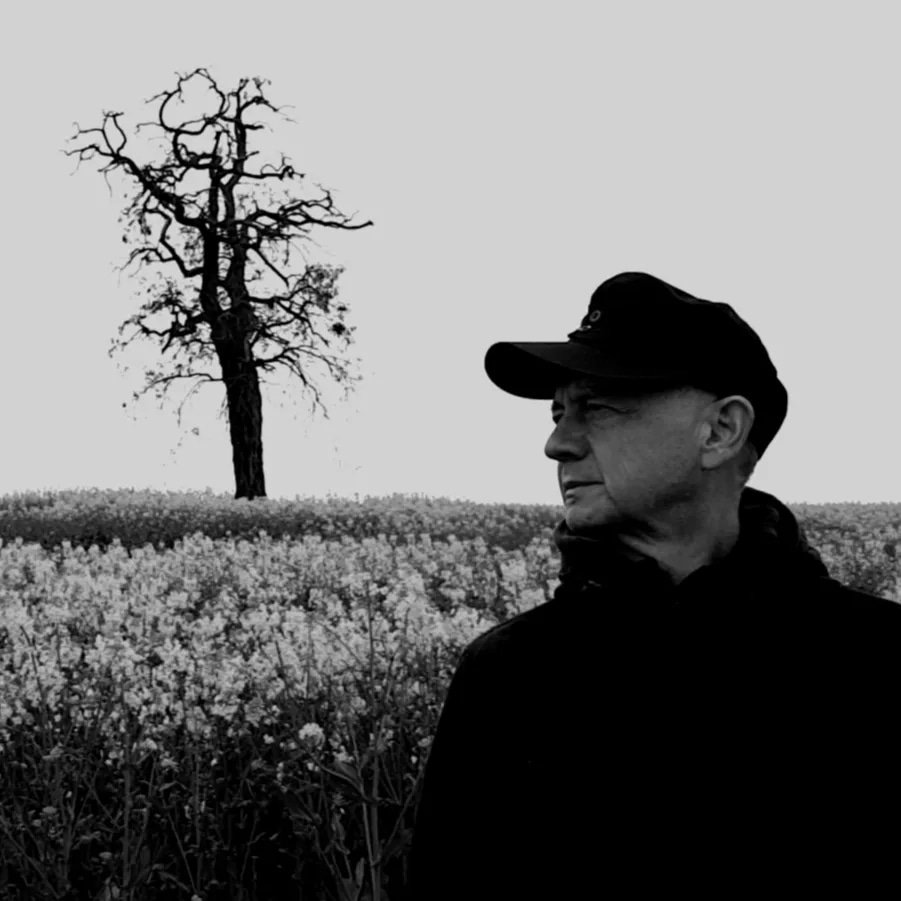
Between the analytical mind of a natural scientist and the soul of an incorrigible wanderer and artist—much like the characters of Hermann Hesse—unfolds the creative work of Henryk Vogel. In a profound conversation, the mastermind behind the cult band Darkwood weaves a tale of intimate church concerts accompanied by a cello, of how dreams and painting seep into his songs, and of an upcoming album where esoteric motifs meet the question of humanity’s place in a disenchanted world
Interview by: Joanna dArk / Proofreading of the original: Jens von Thule
JOANNA DARK: You have traveled extensively throughout your life and worked in various countries. Today, your concerts likewise take you across many parts of Europe. Do travels still change your perspective on the world, or has it become more important over time to understand the places you already know more deeply rather than constantly discovering new ones?
HENRYK VOGEL: It is true that I have traveled a great deal, both privately and through concerts, having lived in Belgium for six months and in the United States for nine. Naturally, traveling still alters my view of the world, and there are still plenty of corners on this Earth that I sadly have not yet visited. Europe, along with North and South America, has always been a particular passion of mine, and I have also been fortunate enough to travel to Africa twice. Asia and Australia, unfortunately, have received far too little of my time.
First and foremost, I am drawn to a country itself—its language, culture, and architecture. Yet I also take immense pleasure in getting to know specific people, their joys, and their struggles. Ultimately, it is always those personal stories, set within particular historical realities, that find their way into my music and lyrics.
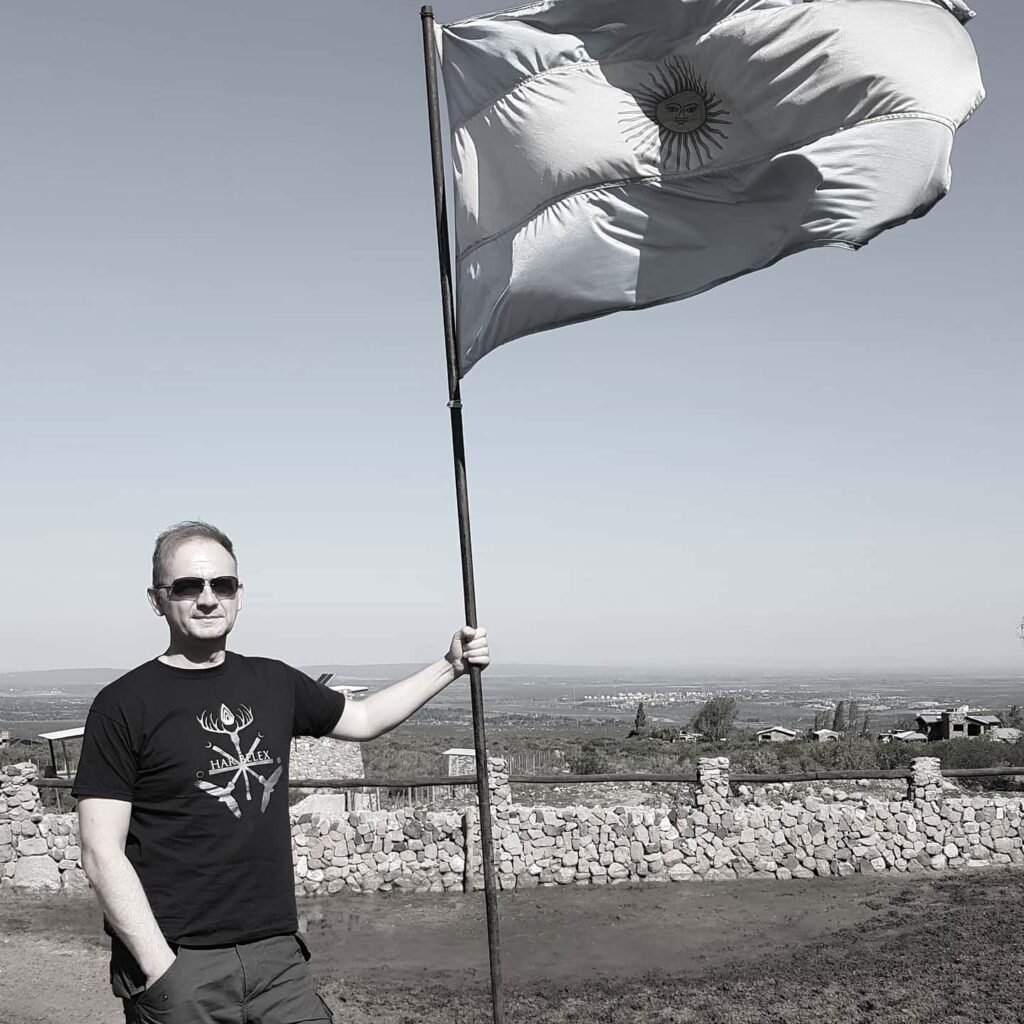
The second part of your question is very intriguing. I had never consciously thought about it before, though I suppose I have already begun acting that way subconsciously. After an extensive yet rather hectic journey through South America, I returned to Buenos Aires and Lima for a longer stay and lived with locals, which offered me a completely different perspective on those countries.
Similarly, after a concert in Aarschot, Belgium, I revisited my former hometown of Mons to see how it had changed over the years. While there, I filmed parts of the music video for “Vieil Armand” and gave Olivier from Imminent (Starvation) a few restaurant recommendations in his hometown, especially regarding the local dish called lorgnette. I also experienced the United States from a fresh angle during our 2015 US East Coast tour, though the American West is still awaiting another visit. Recently, at Wave-Gotik-Treffen, I reunited after many years with Joshua and Kathryn of Lux Interna, who both live in California—all signs point toward that trip becoming a reality.
Songs by the campfire and a world without gods
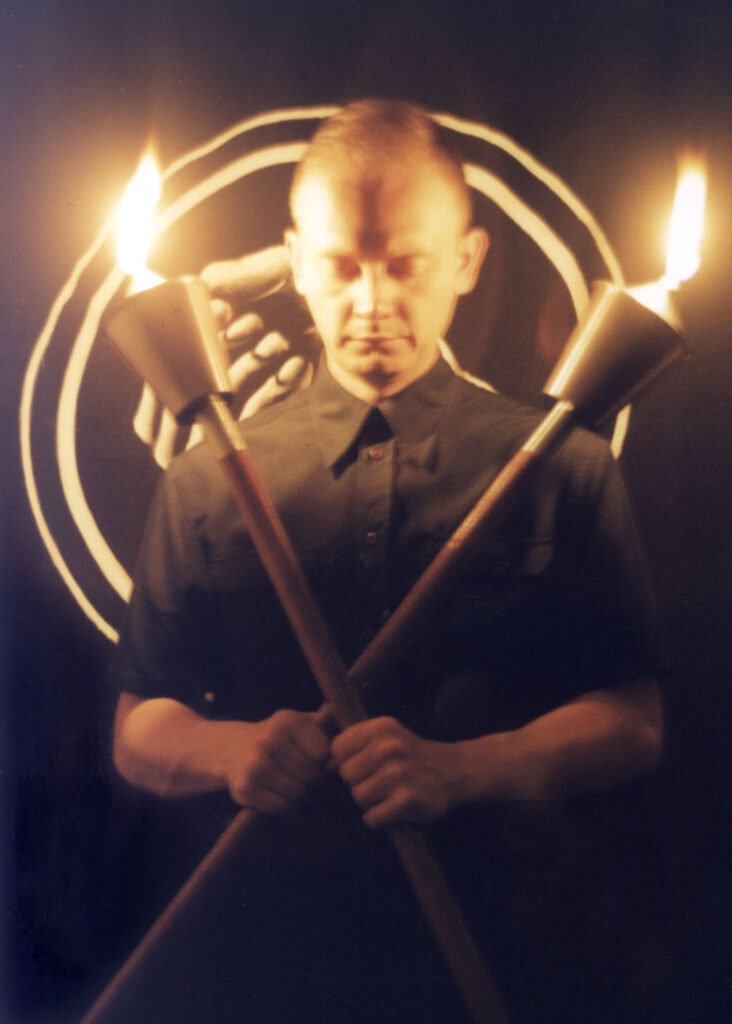
Since the release of “Verlorene Welt,” you have had an intense period of live performances. This year, you played in France as well as at festivals in Saxony, where you will return on November 28 to perform at Mithras Garden. You have also mentioned that you are already working on new material. Where is this creative process leading you? Will the forthcoming album be a natural continuation of “Verlorene Welt,” or will it open a completely new chapter in the history of Darkwood?
Following an album release, there is usually a series of concerts that offer the opportunity to present the new tracks, though Darkwood always strives to perform a representative cross-section of our entire body of work. I also place great emphasis on tailoring each performance to its setting: slightly louder at open-air events, deeply acoustic at smaller campfire festivals, and purely acoustic with cello accompaniment inside churches, so that the attentive listener is always offered something distinct.
“Verlorene Welt” was essentially a follow-up to our much older album “Flammende Welt.” Certain events in 2001 profoundly altered the world, and nearly a quarter of a century later, one can safely say that humanity has learned nothing from them. The twentieth century was a century of wars, and in 2025 we were living in no more peaceful a world. On this record, however, I sought to bring individual human fates to the forefront—to speak directly to the human being, to the soldier. It is an anti-war album through and through, which makes the accusations still leveled against our project feel all the stranger to me.
At the moment, I am working on a compilation contribution for a split CD by Vortex celebrating their twentieth anniversary; the second disc will feature tracks by other bands incorporating Vortex samples centered around the theme of Aleister Crowley.
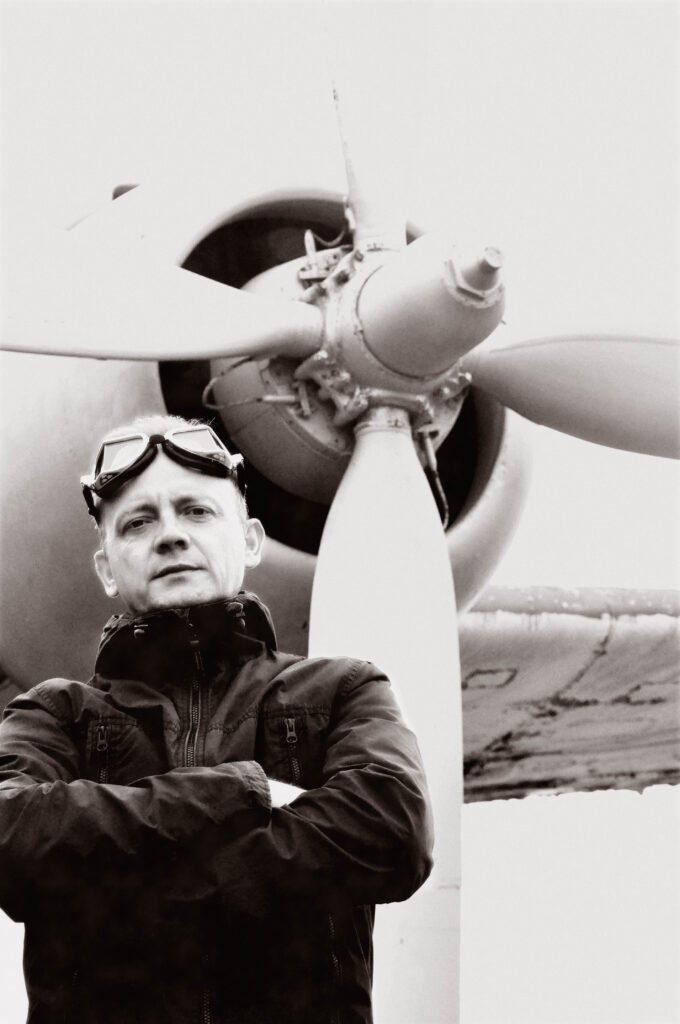
As for the next Darkwood album—half of the tracks are already written—it explores magical and esoteric themes, as well as the question of whether human beings were truly meant to live in cities without gods and without faith. In doing so, we remain true to our tradition of periodically opening a new chapter, just as we previously did with the Cold War (“Herbstgewölk”), occultism (“Ins dunkle Land”), the Wandervogel movement (“Notwendfeuer”), alchemy (“Lapis”), aviation (“Schicksalsfahrt”), and childhood (“Twilight Garden”). The new record will likely lean a bit more acoustic, though it will also include danceable pieces.
On the edge of sleep and the subconscious
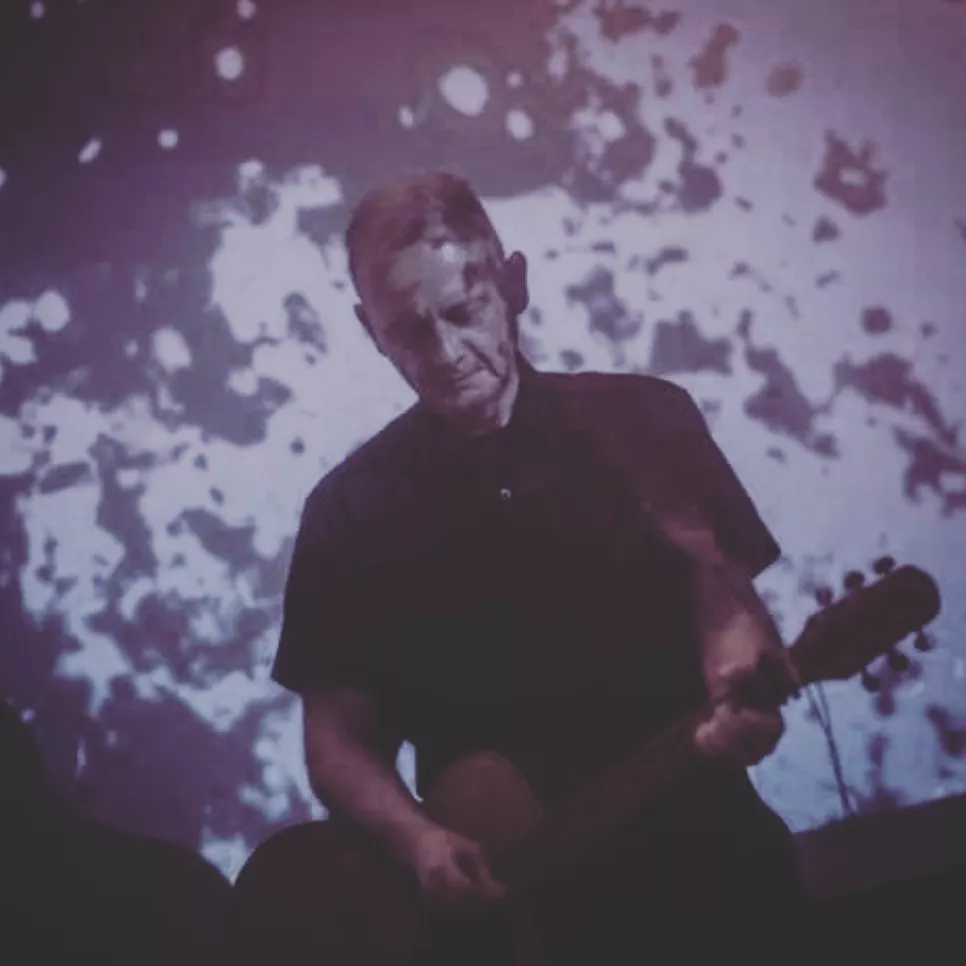
In one of your interviews, you named René Magritte, Paul Delvaux, Salvador Dalí, Max Ernst, and several other painters as key sources of inspiration. It surprised me that Caspar David Friedrich did not appear on that list. As an artist closely tied to German Romanticism, his visual language seems intimately aligned with the atmosphere of Darkwood. Has his work also influenced you, or do you feel a stronger kinship with the symbolic language of the Surrealists?
Caspar David Friedrich must certainly never be forgotten, especially since I live not far from his grave, visit it roughly once a month, and have even guided friends there, including Ian Campbell of Crooked Mouth. I am not entirely happy with the redesign of his gravesite—it used to be far more romantic and secluded—but that was beyond my control.
At the time I answered that earlier question, I was particularly captivated by the Surrealists, as their paintings reflected my own equally strange dreams in an uncanny way. I also deeply love the more Expressionist canvases of Edvard Munch, the Symbolist works of Sascha Schneider—who likewise had strong ties to Dresden—and Marc Chagall, who bridged Expressionism, Cubism, and Surrealism. Ultimately, what matters most is that these works stir something within my subconscious, bringing to the surface things that may be either beautiful or painful, and sparking a creative surge.
You once remarked that Hermann Hesse, Gustav Meyrink, Friedrich Nietzsche, J.R.R. Tolkien, Antoine de Saint-Exupéry, and Edgar Allan Poe had left a profound mark on you. If today, after all these years, you were to recommend three books to our readers that you believe have stood the test of time and continue to inspire, which titles would you choose and why?
Only three books? In that case, I would name Hermann Hesse’s “Narcissus and Goldmund,” as this novel brilliantly encapsulates my own inner conflict. I have never been—nor am I now—purely a musician or an artist; I also possess a highly analytical mind and a keen interest in the natural sciences, which occasionally surprises or even mildly puzzles people.
As my second recommendation, I would choose Ernst Jünger’s “On the Marble Cliffs.” Many people are continually put off by his “Storm of Steel,” which was certainly the gateway to his work for many readers, yet human beings evolve and shift their perspectives. Ernst Jünger is one of the few authors who managed to resist the political appropriation of his writing, publishing “On the Marble Cliffs” in 1939 as a critical parable of totalitarianism—a step that required considerable courage at the time.
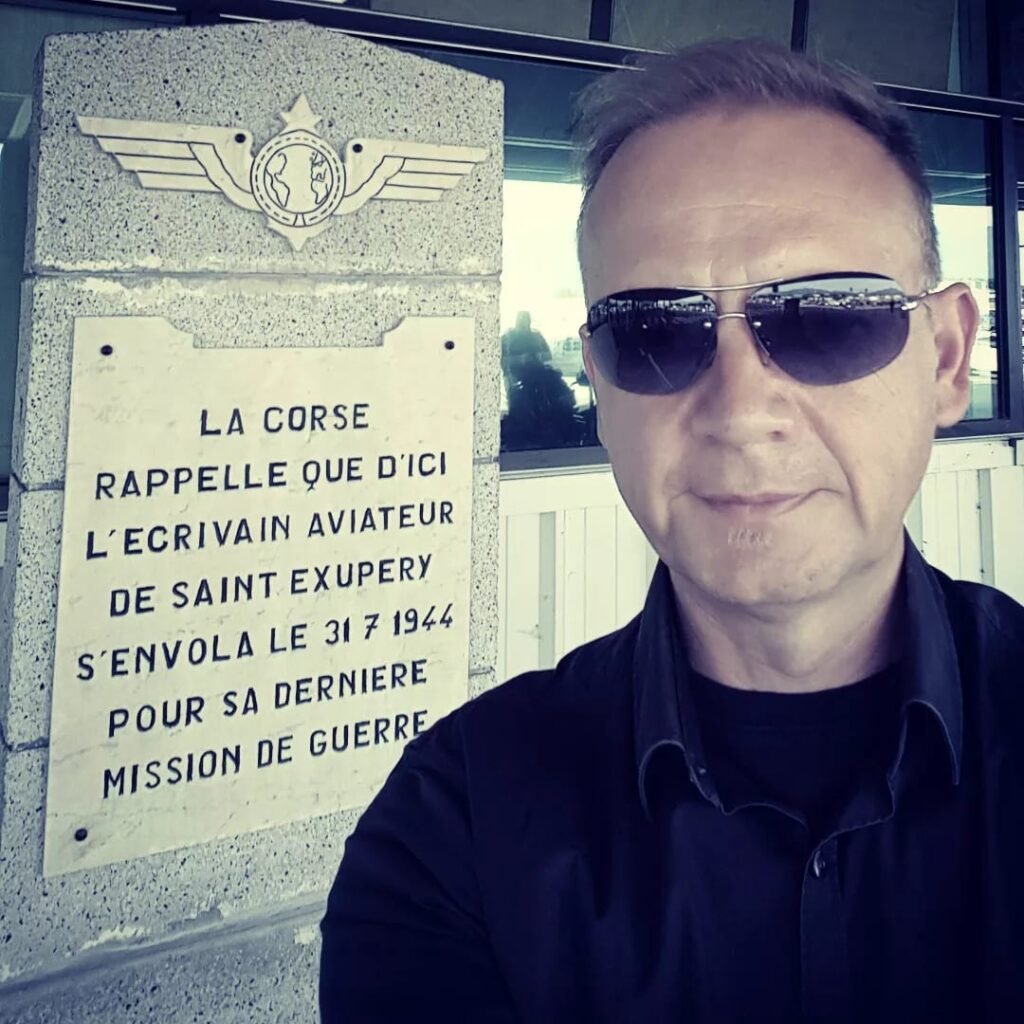
Now I would dearly love to name a work by Gustav Meyrink, but if I am limited to three, I will settle on “Wind, Sand and Stars” by Antoine de Saint-Exupéry. I hold immense admiration for Exupéry as both a pilot and a writer, and in this book that rare combination comes together seamlessly. It stands as a moving homage to friendship, duty, idealism, and humanity.
Man in the face of a disenchanted nature
I was particularly struck by your distinction between two meanings of nature: nature as forests, fields, and rivers, and nature as a spiritual order from which modern humanity is drifting ever further away. Which of these two dimensions do you consider more endangered today?
I believe both are gravely threatened, with the latter sadly serving as the root cause of the former. Because humanity is distancing itself ever further from nature and its laws—no longer viewing itself as part of nature, but rather as its conqueror—it abuses the power acquired through its intellect and technology.
Today, climate change, alternative forms of energy, and the impact of carbon dioxide on the climate are endlessly debated. Naturally, levels of CO2 alongside other gases such as CH4 or SF6 drive the greenhouse effect, yet ever-new technocratic solutions are constantly proposed while people forget that each of these merely generates another CO2 equivalent. Meanwhile, the foundational idea—that we ought to live in harmony with nature, revere it, and unequivocally reduce human consumption—has been pushed completely into the background.
There is no point arguing over parts per million of CO2 in the atmosphere while we mindlessly pollute the world’s oceans, which actually produce seventy percent of our oxygen, or continue clearing primeval forests for agriculture. Until we are willing to recognize ourselves as part of nature and fundamentally curtail human consumption, no technocratic principle will save the Earth. At least two songs exploring a more mindful way of living will appear on our next album.
Songs written in blood and tears
When asked about your sources of inspiration, you once answered quite simply: “Life.” It is an answer at once straightforward and deeply profound. Have there been moments in your life when experiences were so overwhelming that, for a time, you could not translate them into music?
Unfortunately, all too often. Sometimes new impressions are too crushing, sometimes distractions are too vast, and at times the pain is simply too unbearable to be transformed into music. Occasionally, however, lyrics still emerge—such as a text I recently rediscovered that had been written during a difficult phase and forgotten, only to fit effortlessly with a newly composed piece of music. Conversely, one sometimes has compelling chord progressions sitting around for years while one’s thoughts remain too mundane and trivial for anything essential to take shape.
Then, when the next painful situation arises, one wonders whether one subconsciously steered oneself into it just to feel alive—and even though one wishes it had never happened, at least a work of art remains behind. Some pieces truly seem written in blood and tears. With others, I occasionally feel as though they are being written through me, as if in that moment I were merely a medium for the experiences of others. It is difficult to put into words.
Dresden Shadows and Hidden Paths
You and your artistic work have been closely bound to Dresden for many years. I know that what you cherish most about the city are the places tucked away from the usual tourist trails—old villas, industrial architecture, and forgotten cemeteries. If you had to recommend one place in Dresden to me—not a famous landmark, but a spot holding deep personal meaning for you—where should I go and why?
Earlier I mentioned Caspar David Friedrich’s grave at the Trinitatisfriedhof. It is still well worth a visit, though before its restoration it felt considerably more mysterious. One often saw people wandering seemingly aimlessly through the cemetery, and whenever I asked, “Are you looking for Caspar David Friedrich’s grave?”, I was always right.
I would also recommend a detour into Saxon Switzerland and to Radebeul. Right now I find myself in a bit of a bind, as the two specific places I have in mind are closely tied to our next album, two of its songs, and their accompanying music videos. Perhaps we can leave it at this: I will share those two locations with you once the next album is released, as they ought to remain a slight secret for a little while longer.
The titles of your albums—“In the Fields,” “Flammenlieder,” “Notwendfeuer,” and “Verlorene Welt”—seem almost as vital as the music itself. Does an album title emerge at the very beginning of the creative process, charting the course for the entire work, or do you find it only once the individual songs form a cohesive whole?
That is true, and both scenarios have occurred. For my debut album, “In the Fields,” the title came only at the very end because it neatly encompassed the dual aspects of “out in the field” and “on the battlefield,” even though at the outset I had no idea those recordings would become a full-length album. “Flammenlieder,” as a compilation, also received its name at the finish, simply because the selected tracks felt like flames to me.
By contrast, with “Notwendfeuer” or “Verlorene Welt,” the concept and destination of the journey were clear from the very start. “Notwendfeuer” as a term was drawn from an earlier lyric, while “Verlorene Welt” served as a sequel to “Welt in Flammen” from the turn of the millennium. Incidentally, the title of our next album has already been chosen as well.
Fidelity to minimalist form
Darkwood has never given me the impression of a band chasing trends. Even today, as many artists seek new forms of expression and drift away from the classic aesthetics of neofolk, you remain faithful to your minimalist form—acoustic guitars, restrained arrangements, and that singular atmosphere that has defined Darkwood for years. Is this form still the truest vessel for what you wish to say, and does such artistic independence require more courage today than it did twenty years ago?
That is accurate, and simultaneously somewhat curious. Privately, I actually listen to a great deal of very modern music, yet in my own work, composition, message, and a melancholic undercurrent always take precedence. The reason my music remains largely minimalist is my conviction that less is often more. Over the years, bass, keyboards, violin, and even percussion have entered the picture, yet it happens quite frequently that I strip already-recorded tracks back out of a finished song because they feel profane.
Because our pieces almost always originate on the acoustic guitar, it is nearly always present—and occasionally a song already feels complete with acoustic guitar alone. What matters most is that the emotion carries across and the lyrics come into their own. Layering drums or a drum loop underneath merely to make a track more danceable, or inserting an electric guitar solo just to stand out, would be absurd—even though I can play both and have used them in the past when they genuinely served the piece.
Does that take courage today? Both then and now, one simply needs the courage to do what one believes is right, in the way one believes is right—and when done with conviction, it will inevitably have an impact.
At the same time, certain motifs recur across every Darkwood album—memory, nature, history, melancholy, homeland, and transience. Do you feel that since the inception of Darkwood you have essentially been telling the same story, only from the perspective of a person whose gaze shifts with each passing record?
That feeling certainly surfaces at times, accompanied above all by the fear of repeating oneself and slipping into irrelevance. In such moments—tying back to the previous question—the right path is never simply throwing in more instruments and technology, new plugins, and heavier compressors just to sound contemporary and catchier. Instead, it is vital to pause and listen inward to what one truly wants and feels, to confront the past, clear up misunderstandings, question past decisions, admit mistakes, seek new goals, travel to new places, and meet new people.
When you do that, it happens just as you describe: the perspective shifts. Perhaps it results in a similar composition executed at a more refined level, or the exact same theme leading to a different conclusion dressed in entirely new attire. Thus, it is always my story—or the story of the people who surround or once surrounded me—viewed from an altered vantage point. Even when setting poems to music, one makes different choices today and might not set certain older texts again because one felt differently back then.
Nevertheless, all those songs naturally remain in our repertoire, as they mirror my life at a given point in time. Nor should one destroy paintings or ban books simply because they were created in another era. Curiously, in architecture, following a change in political systems, people very often tear down everything that could have stood as a remarkable memorial—human beings are simply too often afraid of memories.
In one interview, you quoted the words of Hermann Hesse: “The songs are full of wistfulness, yet wistfulness is merely a summer cloud; behind it stand sun and trust.” I have long felt that this quote captures not only the essence of Darkwood, but of the classic neofolk scene as a whole. Although this music is frequently perceived as dark or pessimistic, for many of its artists it seems to speak far more of remembrance, beauty, transience, and the search for meaning than of despair. Would you agree with that interpretation?
Absolutely! Whenever I play my music for younger or older listeners who normally gravitate toward other genres, I often hear: “That’s rather dark!” I would characterize the music as contemplative—perhaps quiet—but certainly not dark in the sense of pessimistic. Even in lyrics like “Caucasian Tales” or “Venice,” which touch upon the theme of suicide, those thoughts ultimately dissolve at the end, or at least give way to a sense of endurance or a ray of light.
In other pieces, emotions are deliberately intensified so that the listener feels purged afterward. In truth, most of our songs celebrate life and beauty—simply always paired with a touch of melancholy, precisely because both life and beauty are fleeting.
Beauty in the shadow of transience
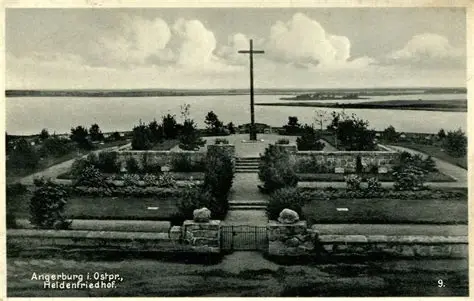
I grew up in Masuria, a region where history has deeply shaped both the landscape and local traditions. The finest vantage point in my hometown is the former Jägerhöhe military cemetery (1914–1918), overlooking three lakes. It is there, of all places, that I experience the greatest stillness and beauty. Sometimes I wonder whether beauty gains its true depth precisely when accompanied by memory and an awareness of impermanence. How do you view this connection?
I feel the exact same way, as touched upon in my previous answer. During a quiet walk through any cemetery, the transience of life becomes vividly tangible. Lingering in a military cemetery deepens that sensation even further, for resting there are people who did not die a natural death—men who gave their lives for freedom, for their ideals, or for the views and interests of others whom they by no means shared, yet were forced to march into war for.
That latter reality is all too quickly forgotten today. Often a soldier has no choice at all—save the choice to die on the spot for refusing an order. Everything is reduced to black and white, and the fate of the young soldier is completely overlooked.
I once tried to portray this in “Little Soldier”—we are often talking about eighteen- or nineteen-year-old boys who have never had a girlfriend, or have just met their first love, and suddenly find themselves standing at some border with a rifle in hand. I can deeply relate to the idea that in such a history-steeped place of transience, one learns to cherish beauty and life all the more profoundly.
I will definitely have to visit the Jägerhöhe military cemetery. For me, such a place was the battlefield of Hartmannswillerkopf, seen in the video for “Vieil Armand.”
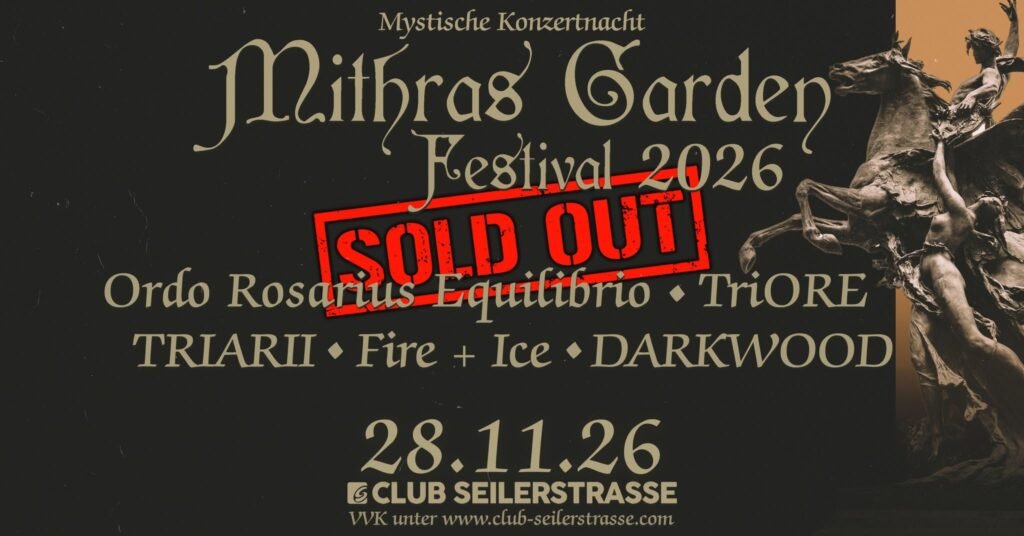
Neofolk gatherings such as Schwarzer Herbst or Mithras Garden are far more than mere concerts—they are meeting grounds for people who share a kindred sensibility and outlook on the world. What makes such festivals so vital today in your eyes? How did you enjoy Schwarzer Herbst Festival in Löbau, and what can we look forward to at Mithras Garden?
One could easily expand that list to include several other larger and smaller festivals in eastern Germany; one can only wish that western Germany would also try once more to establish one or two darkfolk festivals akin to the former BLACK-Festival or Lichterflug. This year we played Schwarzer Herbst for the very first time, and it was magnificent—the atmosphere inside St. John’s Church and the acoustics were truly singular, and we were welcomed with tremendous warmth.
The concept was “…like a family homecoming…”, and it genuinely felt that way. Those of us from this circle have known one another for so endlessly long, have walked many paths together, and have weathered similar struggles and strokes of fate. Some we see regularly, others we reunite with after twenty years, yet we remain in touch and in conversation, sharing thoughts, sorrows, and joys. In keeping with the spirit of the event and the venue, we did not perform with our full festival lineup, but returned to our roots—to our original studio and live configuration of acoustic guitar and cello.
Life’s circumstances had kept my cellist and me apart for eight years in the meantime, so we not only played a special concert, but were also able to spend some cherished time together again. On top of that, a spontaneous collaboration took place with Joseph Budenholzer of Backworld, with whom we performed one of his pieces as an encore.
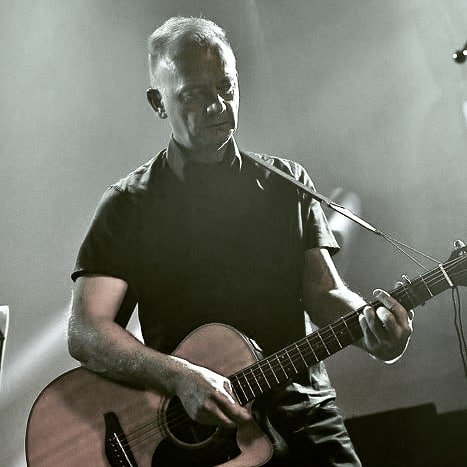
At Mithras Garden, we will return in our full live lineup with rich percussion, greater movement on stage, and dedicated background visuals. Ian Read of Fire + Ice will also be on board once again, just as at Sun Set Forever, accompanied by our violinist.
We are looking forward to it—see you in Zwickau!
Thank you for a wonderful conversation. See you in Zwickau!
DARKWOOD: http://www.darkwood.de
http://www.facebook.com/Darkwoodofficial