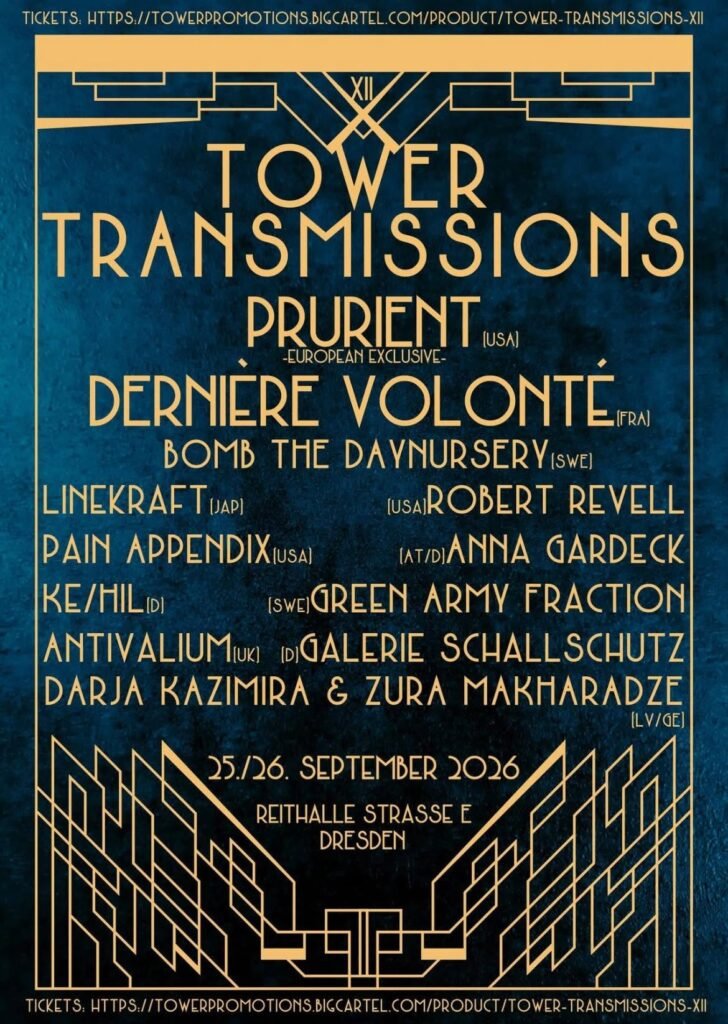
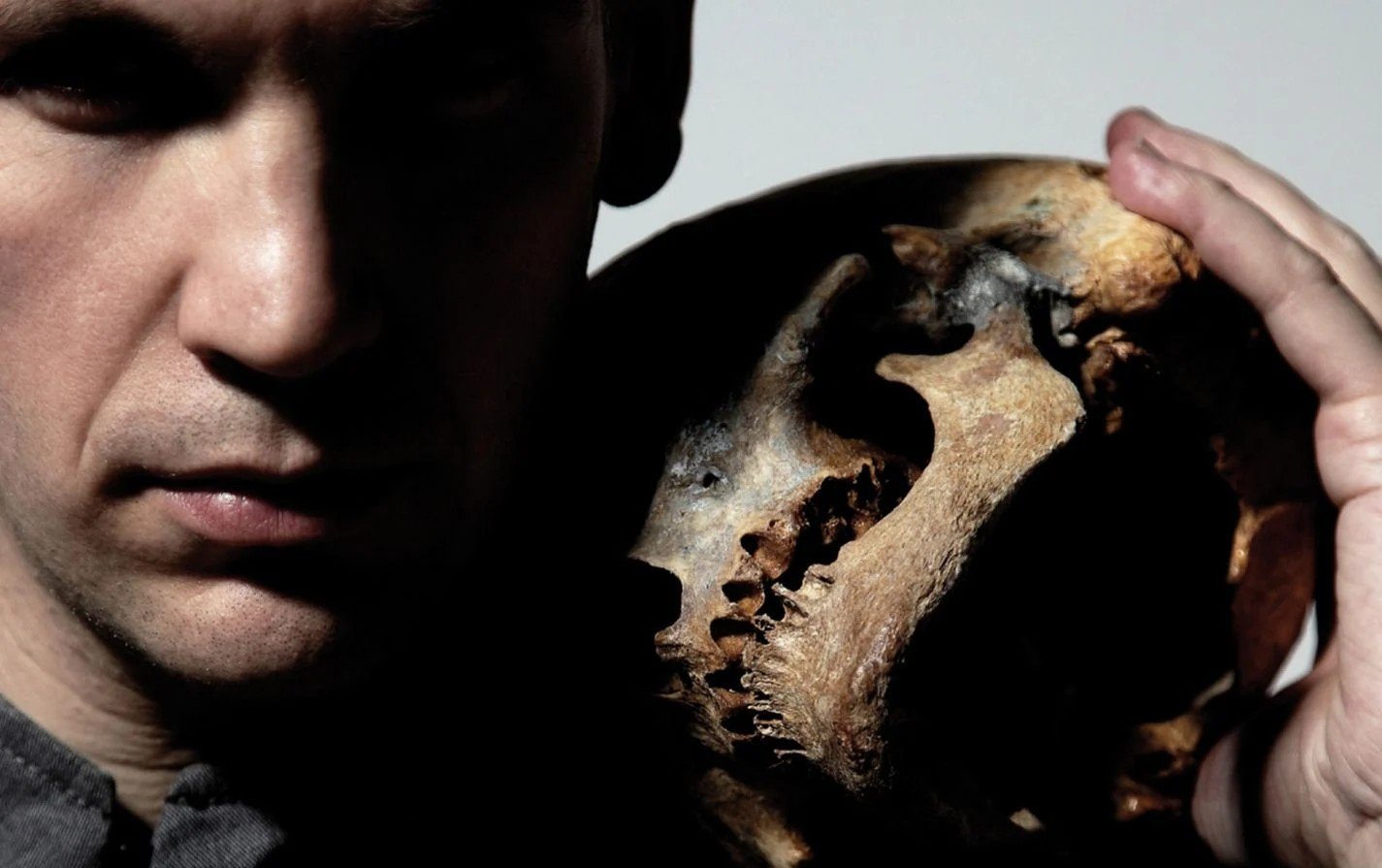
Geoffroy D., the artist behind Dernière Volonté, has been crafting his own unique musical world for nearly three decades—one filled with melancholy, depth, and distinctive elegance. Ahead of his performance at the Tower Transmissions festival in Dresden (September 26th), we discuss truth in art, creative independence the and the emotions from which music is born
JOANNA DARK: Your music very often leads us towards memory and loss, carrying a powerful emotional charge. On Frontière, I find something particularly familiar about this—perhaps because I have experienced the loss of loved ones myself. Do you think that peace of mind can also be a source of creativity, or does true art always arise from some kind of fracture?
GEOFFROY DELACROIX: Death is an intrinsic part of life, and vice versa. I’ve lost many friends recently, and each time it is a profound pain that I try to put into perspective, to rationalise. One day, misfortune strikes, and channelling it elsewhere in order to draw creative energy from it seems essential to me if we are to make it through adversity. The truth of our feelings then reveals itself in its rawest, most visceral form. What could be more unsettling than a raw feeling in which sadness, love, nostalgia and hope intertwine?
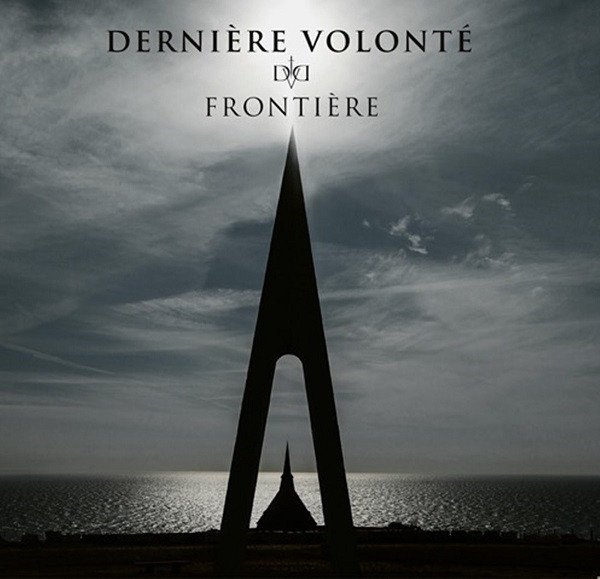
And is there a feeling that you haven’t yet transformed into music?
Joy. But all you have to do is listen to a Dean Martin record to find it, so I have no need to do it.
Throughout your albums organs resonate; for me, they have a particular power on Immortel. At times, your music almost smells of incense… it creates an atmosphere reminiscent of the sacred. Does a certain spirituality consciously permeate your work, or is it more the listener’s perception?
I’ve had many complex experiences relating to religion… My entire youth was shaped by it, so inevitably certain ‘folkloric’ elements—such as the organ—have found their way into my work. They possess a sacred and timeless quality, and that is precisely what draws me to them.
I started using organs rather by chance; it also helped that my first keyboard happened to have that distinctive sound. I also think that, over time, it has become one of Dernière Volonté’s hallmarks.
Certain symbols also regularly recur in your work (Devant Le Miroir, Frontière, Cristal…). Mirrors. Transparency. Crystal. What keeps drawing you back to them?
I would need psychoanalysis to understand what keeps bringing me back to them. But in reality, I think we are all obsessed with our own reflection (mirror), death (the void), and fragility/illness (crystal). You can also add darkness, war, youth, separation, destruction, love and the summer sun.
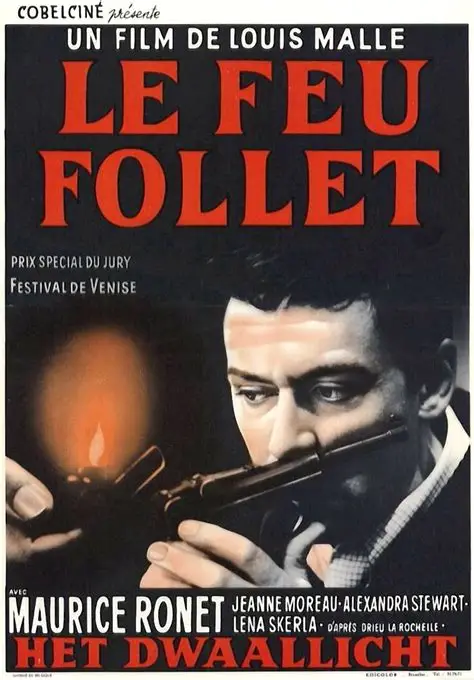
One such figure marked by death and existential disorientation is Alain Leroy, the protagonist of the film The Fire Within [Le Feu follet, meaning Will-o’-the-Wisp—JD’s note] who was based on Jacques Rigaut [a French writer associated with Dadaism, known for his nihilistic work and fascination with death; he died by suicide at the age of 31—JD’s note]. I know that when you were very young, you saw yourself in this character. I wonder how you view Alain today—from the perspective of a mature man.
I still understand him, and I have not changed, even if, with hindsight, suicide needs to be put into perspective. The Fire Within was important to me for a long time and, as you point out, I could not help identifying with this complex, lost character. The first time I saw the film, I don’t think I fully understood it (I was 16). But when I watched it again years later, it suddenly seemed so evident to me, like a striking mirror. What is interesting is that the character is not the same in the book as in the film. One is fairly close to its author, the other to its director. It’s as if Alain Leroy were, in the end, a common figure, dramatically entrenched in the streets of Paris.
The world is full of ‘will-o’-the-wisps’—lost silhouettes in illuminated cities that lose their light as time goes by. I can only understand them, just as Balzac understood the ‘désenchantés’ [disenchanted] of his time.
And if you could say something now to young Geoffroy, what would it be?
Don’t be afraid.
You often say that what matters most in art are emotions, truth, and what flows from the heart—and that everything else is merely imitation.
That is true, and it can be verified. I have great respect for people who live their ‘art’ in the most sincere way possible, even if I do not agree with their choices. Whether it is writing, music or visual art, the same holds true: what matters most is singularity, exceptionality and effort.
I sometimes feel that today the world is even more focused on appearances and image than on authenticity. Do you think it is now more difficult to create without giving in to the expectations of others and to remain true to what one genuinely carries within?
Each era brings changes compared with the one before it, both good and bad. It is easier to create today than it was yesterday, but paradoxically much harder to stand out from the crowd and distinguish oneself. One shouldn’t give in to expectations—it makes no sense! I do not really like making one record identical to another, although I am aware that there is a connecting thread running through each of them.
I truly liked your words about how you value uniqueness most in a person. Such a reflection requires depth and attentiveness… As an individualist, do you often meet people who influence the way you see the world?
We learn throughout our lives, so yes, I meet people who possess that strength of character, but it is very rare. I strive to understand the world around me, and I realise that the sum of my knowledge is a multitude of things I gather here and there. Without the singularity of individuals, there would be just nothing! Or rather, there would be a terrifying world, similar to that depicted by Orwell, toward which many nations are heading. I am pessimistic about the future—humanity will lose everything if it fails to understand the value of life around it.
Is there anything that once seemed extremely important to you but has now completely lost its importance?
Cities have lost their importance for me. The true connection lies elsewhere: in the earth, in the air, in water, in wildlife and in the sky. The true Gods are to be found there; the rest will inevitably fade away.
After all these years of creating, what gives your life the greatest meaning today?
My close ones and animals.
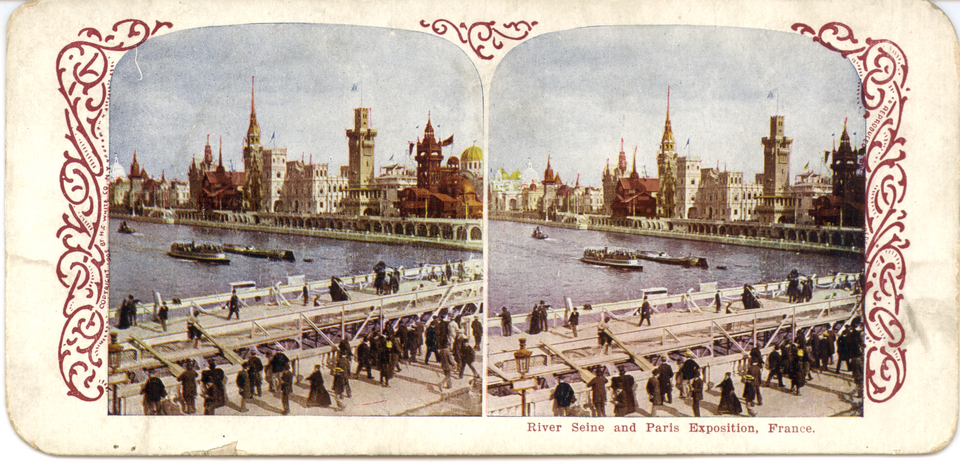
If I went to Paris and wanted to discover the city through your eyes, where would you send me? Not to places you’d find in any guidebook, but to places where I could best understand France, its history, its spirit. And maybe even find a part of myself.
Paris has changed a lot in recent years—and not necessarily for the better—but it remains the most beautiful city in the world. To get to know it, you have to dive into its centre, into its noise, alterations, its contradictions and mechanisms. Then let yourself be carried along by the names of the streets, following the Seine, the avenues, the streetlamps, its mechanical and electrical innards and its sounds. There isn’t really any meaning to it, but often everything comes from its heart.
When I look at the names that recur in your interviews—Céline, Jacques Rigaut, Drieu La Rochelle, Guillaume Apollinaire, Alan Vega or Taxi Girl—I wonder whether, in recent years, you have discovered a creator who has joined this circle. Or perhaps your musical universe has changed with time?
I reject nothing, but I set certain authors aside to give precedence to others, and it is the same with many disciplines that move me. To answer your question, I remain curious about everything, and what surrounds me is extremely important. I do not want to remain trapped in a bubble and limit myself, and that is often the trap; it would not make much sense. My musical universe remains the same because I am the sole master on board, despite the passing years and, at times, a gradual loss of motivation.
For many years, you collaborated with Albin Julius and Hau Ruck! Looking back today, what did you value most in that collaboration?
Hau Ruck! was a springboard for me at a time when I did not really have a serious label. I began corresponding with Albin around 1999, I think, and we immediately started cooperating together. It was a very stimulating period. Albin was completely open-minded about what Hau Ruck! represented; he wanted to release every kind of music in the world and open his catalogue to many bands. He had very varied, eclectic tastes, and when I met him he loved things like Manu Chao, Falco, George Michael and Moby; he listened to them all the time.
With Hau Ruck!, he opened a magnificent door for me. It was wonderful to be able to record simple, very amateur music and release it easily, without stress. Because of his experience, Albin had a significant market advantage over me, and the contract with Tesco opened the door to a more ambitious distribution network than I had previously had access to. Suddenly, I was seeing my records in stores, people were talking to me with interest about my music, and I was preparing for my first concerts; it was quite crazy, dynamic, and very stimulating.
Your albums have a highly distinctive visual identity. How does that part of the creative process work, and to what extent are you involved in designing the album covers?
Since Mon Meilleur Ennemi, Andy Julia has taken care of it, and it is no small task. It usually happens in this order: finish the album, reflect on its visual symbolism, consider how best to approach it, and then search for or create the image or images. Andy is patient and has an incredible archive of photographs, which allows us to explore a wide range of possibilities. It all hinges on the chemistry between sound and image, and often it doesn’t work first time round.
Your listeners have learnt to be patient. Can you tell us whether their wait will soon be rewarded and whether they can look forward to hearing some new compositions?
Naturally, yes. I have worked a great deal in recent years, so I have plenty of material—enough to make quite a few meaningful albums. The first is CENDRES, which should be released in September; as for the rest, you will have to keep your eyes and ears open.
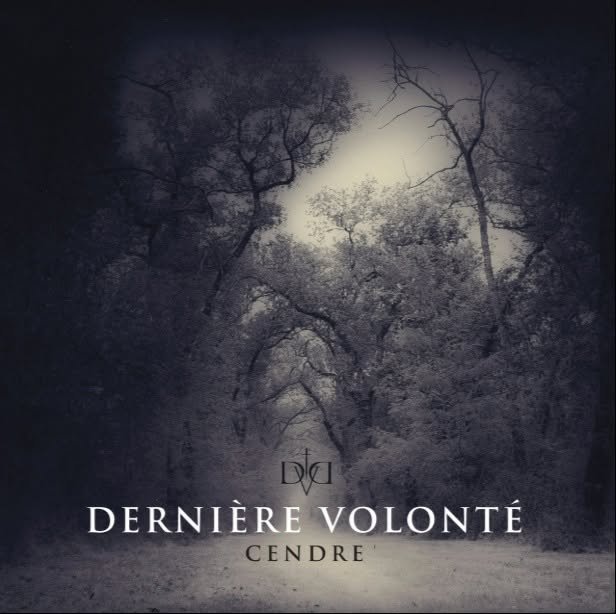
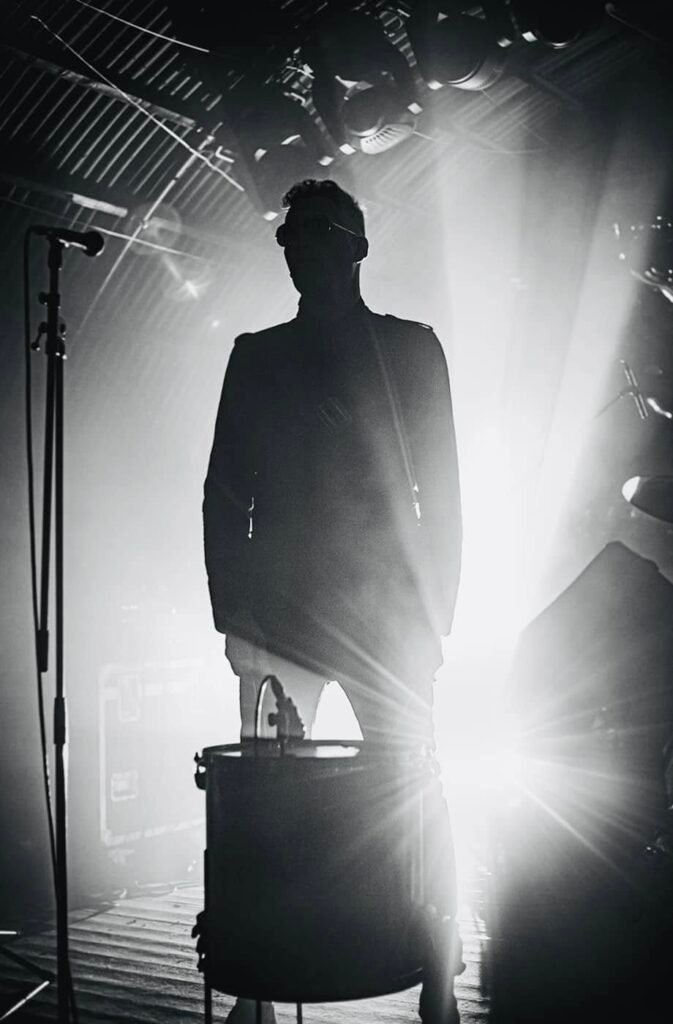
At the end of September, you will perform with Dernière Volonté at the Tower Transmissions Festival in Dresden. What can we expect from this concert?
I do not know myself yet. It is still a work in progress… Time will tell!
Thank you very much for this wonderful conversation.