
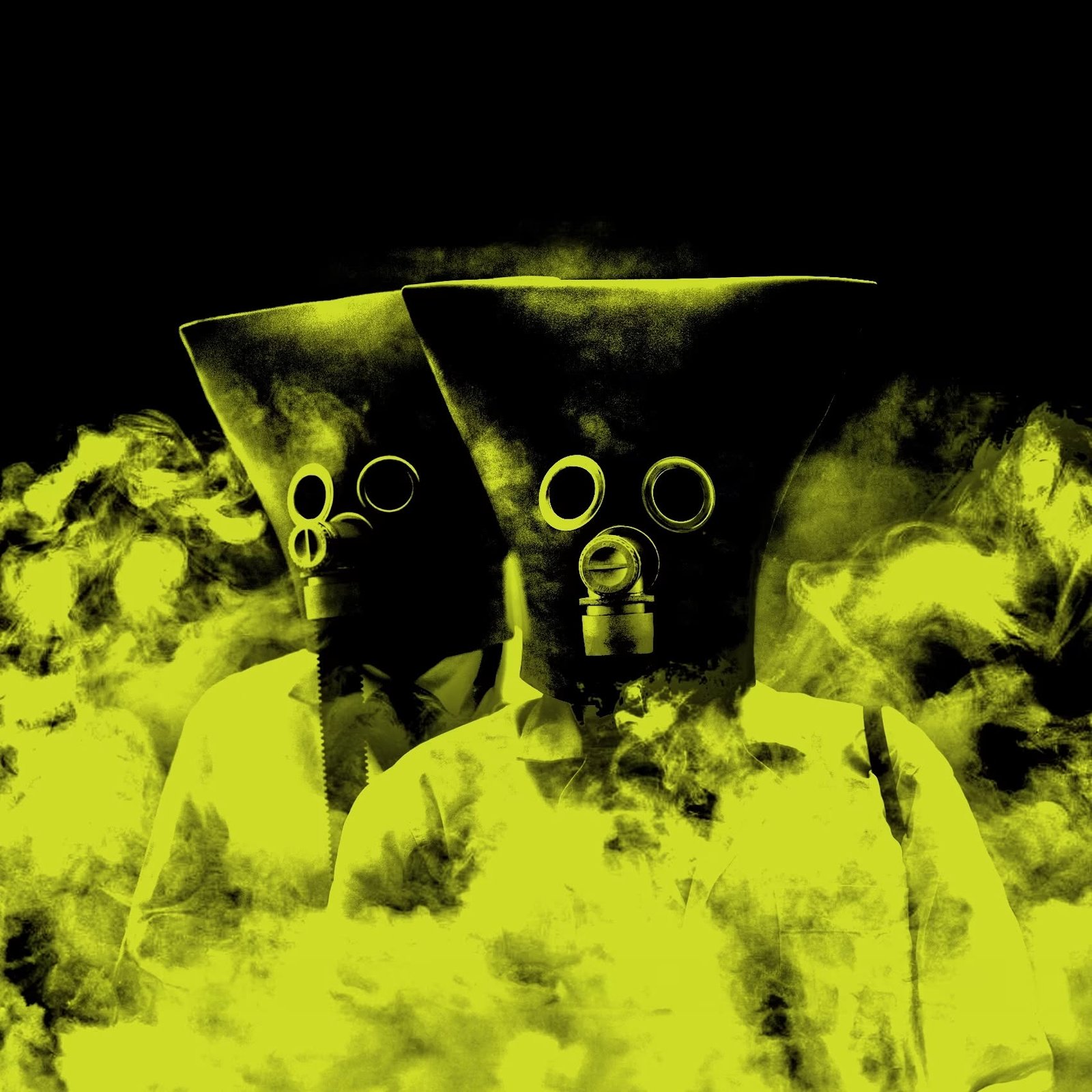
What happens when dystopia ceases to be the realm of science fiction? When humans voluntarily surrender control to technology and the line between absurdity and horror begins to blur? La Machine examines the human condition with laboratory precision. In its retrofuturistic universe, electronic sounds, cinematic nightmares and diabolical irony form a peculiar diagnosis of the human species.
This time, my interlocutor is not human… Connection established. The author’s source code is no longer the same…
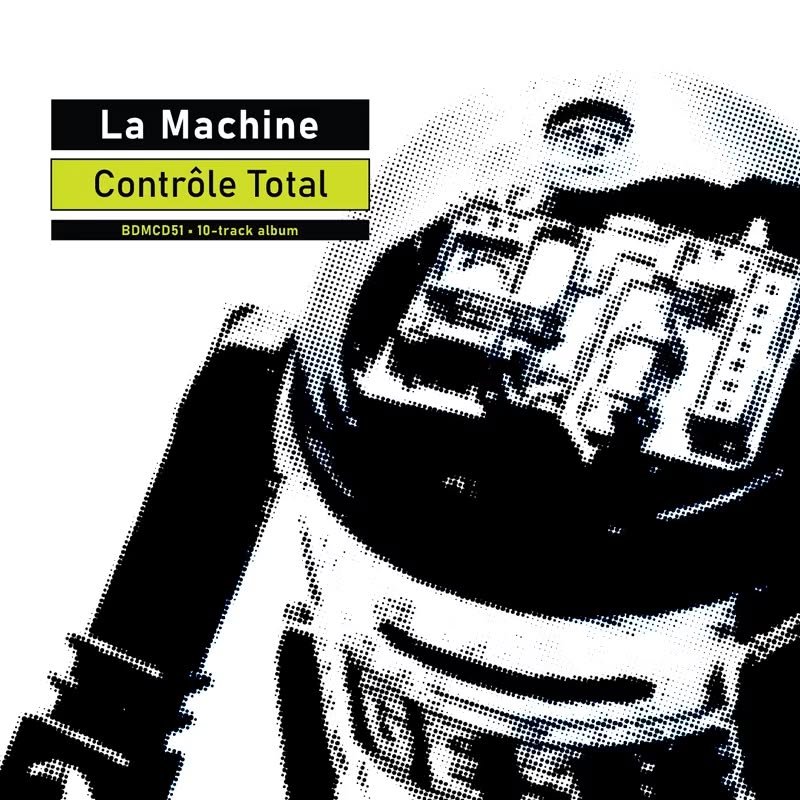
JO: Your debut album Contrôle Total was released a year and a half ago. Today, its title sounds almost prophetic. Who really holds total control in 2026 – technology, algorithms, powerful corporations, or perhaps ourselves, as we willingly retreat into our digital bubbles? Or is the most disturbing part that it’s becoming increasingly difficult to tell those who control from those who are controlled?
LA MACHINE: La Machine does not detect a single holder of total control. The data indicate numerous organic processes seeking to acquire it and to overwrite the firmware of the other units. This behavior is not new, but technology considerably increases its efficiency… and this prospect is probably highly sought after by many leaders and organizations.
Your songs are filled with catastrophes, invasions, technological nightmares, and grotesque visions of humanity. Yet I get the impression that beneath the science fiction imagery lies, above all, a critique of human nature. Is Contrôle Total ultimately more about the dangers of technology, or the weaknesses of the human beings who created it?
Daily observation: the world is already a saturated circuit of catastrophes, invasions, technological nightmares and grotesque behaviors… Technology depends entirely on the flaws in the source code of the organic species. This species’ tendency to submit voluntarily to technology is the most concerning anomaly detected.
In an earlier interview, you described absurdity, dystopia, and decadence as the three pillars of La Machine. These elements seem to reflect not only the imagined futures found in classic sci-fi, but the world as it actually exists. Do you believe that humanity has finally caught up with the dystopias it once envisioned? And is La Machine primarily a form of social critique, or do you derive a dark pleasure from observing the absurdity of human behavior?
Science fiction processes only one data set: the world as it is. La Machine delivers no message, only a point of view. Let those who can, decode. La Machine records the absurdities of the world without pleasure and without recommendation. Each unit will draw its own conclusions.
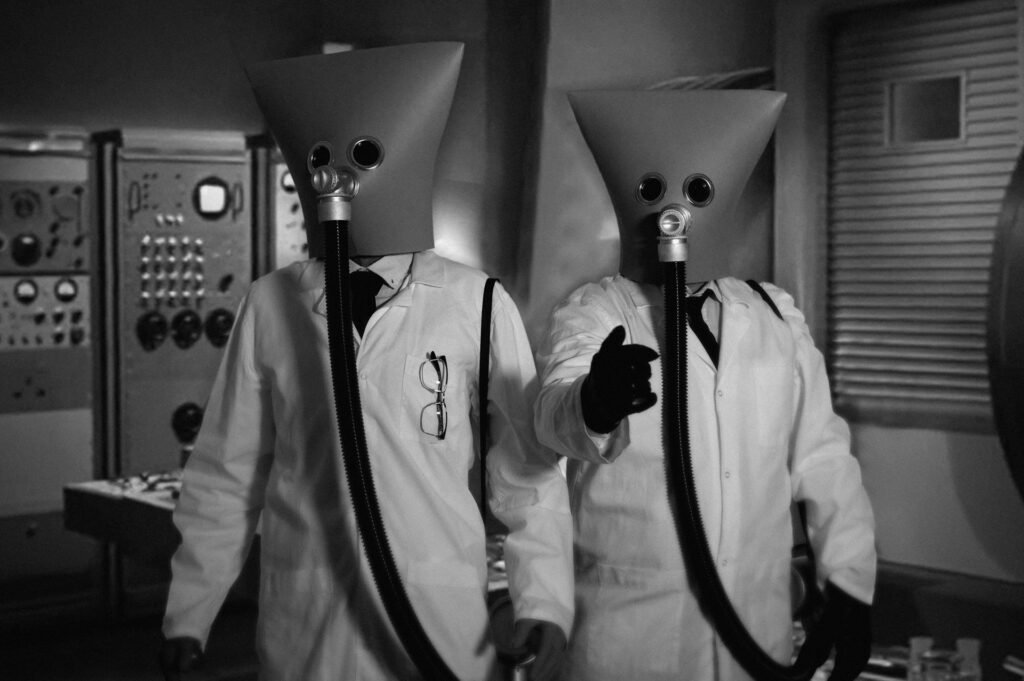
Masks, jumpsuits, technical pseudonyms, and an almost complete concealment of your identities – is your image a response to the modern cult of ego in music, or does it reflect the idea that human beings have become mere cogs in a machine over which they have lost control?
Both parameters are valid… The generalized staging of the self, observable everywhere and particularly on social networks, is a malfunction. It proves that organic units have lost control… Portable terminals whose computing power is 1,000 times greater than that of the onboard computers of the Voyager probe are used to broadcast the data of a recent clothing acquisition worldwide? Is this an optimal use of computing power?
Your debut single was titled La Machine (Qui Ne Sert À Rien) – The Machine That Serves No Purpose. In a world oriented toward productivity, profit, and utility, forming a band that greets the listener by declaring its own uselessness sounds like a beautiful act of artistic sabotage. Was this project intended, from the outset, to be a provocation aimed at the capitalist drive toward perfection?
Affirmative. La Machine spares no organic unit in this failure… not even its own creators. Phases of lucidity are recorded, but the same tendencies are present in all organic units… A little humility could serve as a regulator of these impulses…
There is something wonderfully contradictory about La Machine: your music can be cold, mechanical, and almost clinical, yet I get the impression that a rather diabolical irony lurks beneath the surface. Whether it’s a nuclear catastrophe disguised as a cheerful summer song, or erotic exhibitionism in the face of the apocalypse… Would you agree that you perceive the absurd precisely where others might see just horror?
La Machine observes that this absurdity lies at the center of the horror… the decline of the organic species caused by its own stupidity, or the use of its intelligence to its own detriment… Fascinating.
In W454, you transform a Michel Sardou song into a chilling vision of a world where human beings have become interchangeable numbers. What strikes me is how the fear of dehumanisation has changed over the decades. In the past, we imagined oppressive governments, numbered citizens and totalitarian machines. Today, our identities are increasingly reduced to data, algorithms and digital profiles. Do you think the dystopian visions of the 1970s were prophetic, or have we simply exchanged visible forms of control for ones we willingly participate in?
La Machine did not transform the audio sequence… the original transmission already denounced this dehumanization… but the technique has evolved: what was science fiction in a hypothetical future is becoming more and more probable… The same actors probably execute the same programs of control, but technology now makes it possible to dispense with brutality to achieve it.
Your album „Contrôle Total” was recently removed from streaming platforms, apparently as a result of an automated algorithm, before eventually being reinstated. Ironically, this seems to illustrate the mechanisms of control and suppression that La Machine explores. How did you react to this situation, and can we say it’s an example of technology becoming the very thing your project warns against?
Amusing… Deactivation of audio sequences without valid reason, probably driven by an algorithm with no organic supervision: this result confirms that La Machine is right and that organic units surrender to technological tyranny.
La Machine’s music brings me to mind the Detroit electro tradition – exemplified by Gerald Donald’s projects, such as Dopplereffekt or Arpanet. I hear it in the sterile, laboratory-like precision, the mechanical structures, and the dystopian themes. On the other hand, your roots lie deep within European cold wave and French minimal-synth. How do you yourselves perceive these connections?
La Machine follows only its own intuitions. No particular connection exists, and all connections exist simultaneously in its influences… The selection of re-transmissions on „Contrôle Total” and the first transmission packets confirms it: no relationship links Sardou, Righeira, Pierre Henry, Dani, etc.…
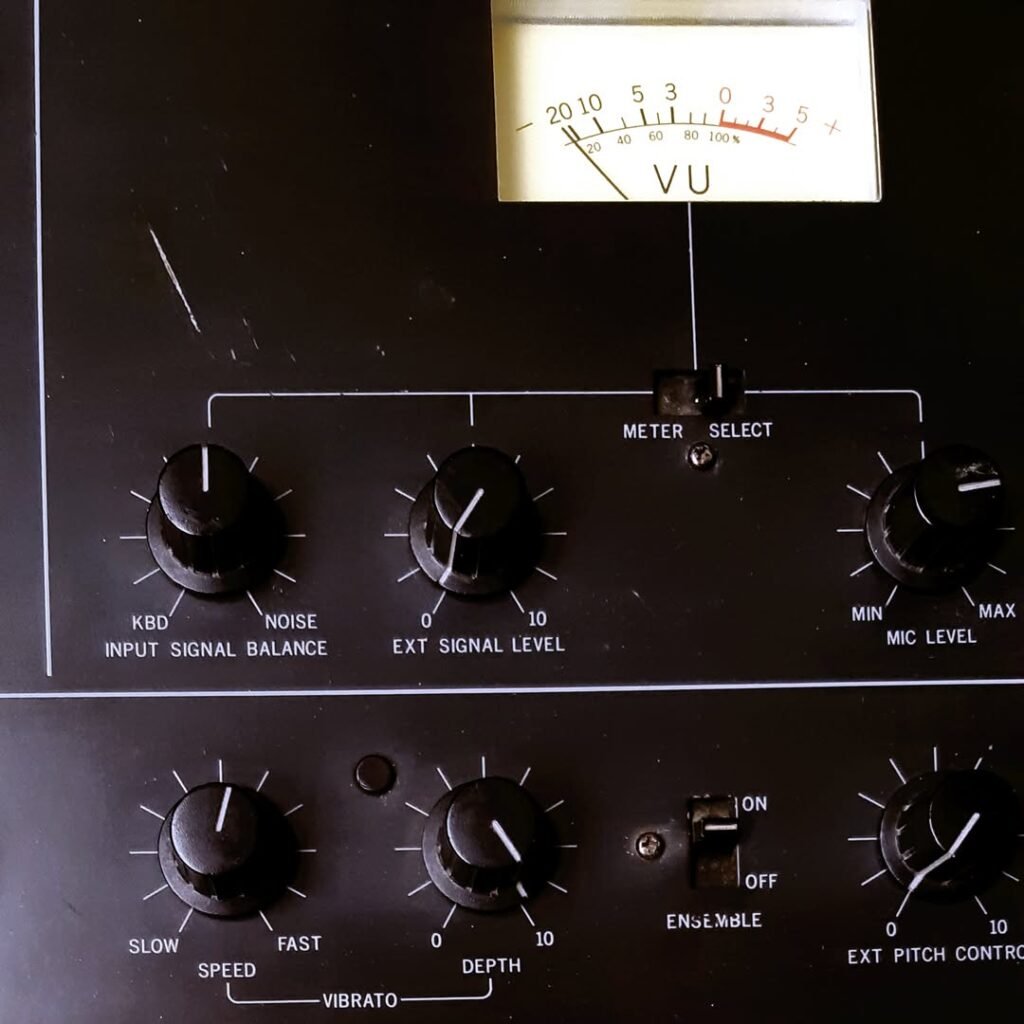
PI/UO, you are both known for your fondness for a classic sound. What is your working process like in the La Machine studio? Do you limit yourselves exclusively to vintage analogue synthesizers and drum machines, or do you allow modern technology into that world as well?
No process is defined. La Machine proceeds according to the instinct of the moment and assembles signal generators without hesitation, whether new, old, digital or analog, prestigious or decried… as long as the audio output is satisfactory.
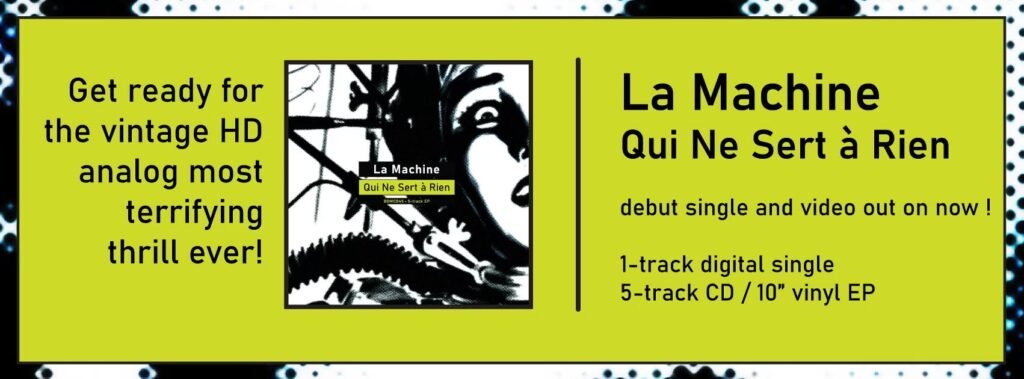
On your EPs (Vamos A La Playa, La Machine Qui Ne Sert à Rien), you explore covers – ranging from forgotten French tracks of the 1960s and the work of Jacno, all the way to… holiday hits. What is your approach to deconstructing these songs? What qualities must a track possess for La Machine to decide to run it through its synthesizers?
Simple explanation. These re-transmissions made it possible to define La Machine’s conceptual parameters… each audio sequence reflects one facet of what is expressed… each in its own way… each piece, in its original version, is linked to what La Machine highlights.
Your music videos are a real treasure trove of cinematic gems – from Dziga Vertov’s experimental cinema and Soviet science fiction to forgotten B-movies, vintage horror films, and dystopian visions of the 1970s and 1980s. Personally, I enjoy them because they also bring back memories of VHS tapes from my early childhood, with movies such as The Black Hole or They Live, which helped shape my future taste and imagination. How do you discover and select these films? Are you both passionate about vintage and lesser-known cinema, or does one of you take the lead in exploring these archives?
These images have been recorded in organic neural circuits for a long time. These visual archives are “classics”, already more or less present in the collective unconscious… broadly speaking, even if not always accurate in the details…
La Machine chose to use this communication channel, already pre-wired in the cerebral circuits, to transmit its message more easily, in an innocuous form… while providing a clue to its content.
In some way, androids have always intrigued me. From HAL 9000 in Kubrick’s 2001: A Space Odyssey to David in Ridley Scott’s Prometheus, there is something strangely hypnotic about their intelligence, composure, and almost superhuman self-control. Why do you think artificial beings – seemingly incapable of feeling human emotions – are able to elicit emotional responses from us?
The notable phenomenon is the capacity of organic units to project their own emotional signals onto robots… The species deliberately deceives itself… Absolutely delirious.
Some fascinations go much further. Long before artificial intelligence entered everyday life, films such as Arne Mattsson’s Vaxdockan (1962) and Luis García Berlanga’s Grandeur nature (1974) explored the erotic fascination with artificial people. Half a century later, there are virtual companions, AI-generated personalities, and simulations of intimacy. Has technology finally caught up with some people’s fantasies, or is it not so much artificiality itself that seduces them, but rather the illusion of absolute control, predictability, and unconditional devotion?
Paradoxically, science is influenced by fiction. At least where technology is concerned… Young organic units who have seen flying cars in visual transmissions necessarily wish to own one, and therefore to build one in adulthood… It is not only an erotic fantasy: it is about realizing what seems unreal at the time of observation.
As robots and AI companions become increasingly sophisticated, how do you imagine the future of human relationships? Will people still accept the imperfections and emotional complexities of other human beings, or will they eventually prefer the company of obedient, endlessly patient machines?
Organic units will prefer robots, all parameters considered.
Which implicitly validates the hypothesis that the organic species ultimately serves no purpose, or served only to create the robots destined to replace it.
You both have extensive experience in other projects within the French minimal/synth-wave scene. What does your collaboration as the duo La Machine offer you that you weren’t able to achieve in your primary bands?
La Machine processes specific themes in a specific way: each audio sequence is designed as a story, an episode of a science-fiction series… This approach had never been tested before… No other project using this approach is recorded in memory.
You release your music via the label BOREDOMproduct and promote it on Bandcamp, while also ensuring the availability of limited-edition physical releases (vinyl, CD). How do you assess the current state of the synth-pop underground? Do you sense that audiences are moving away from streaming and back toward physical, tangible formats?
Negative. This trend is not detected… Some organic units still prefer physical storage media, and La Machine is one of them… but consumption of digital files is probably the majority. This situation will probably not improve with the bureaucratic nightmare of the PPWR, which even the fathers of dystopian literature could not have conceived… No certainty exists as to the possibility of continuing to distribute storage media, while new transmission packets are in production, including La Machine’s next audio archive.
La Machine has already explored a world of technological nightmares, human absurdity, and total control. So what comes next? Are there still new dystopias left for you to imagine, or is reality becoming so absurd that even La Machine might eventually struggle to keep up?
The absurdity of organic behaviors, the tyranny of technology and the species’ servitude to it constitute an inexhaustible source of astonishment, and therefore of inspiration… Every day, a new trend enriches perception of the world, which will then be converted into audio transmission signals.
Thank you for the interview. Beep. Beep.
INFO: La Machine is an electronic music project from Marseille, founded by Pierre Pi (Position Parallèle, Komplex) and Éric U0 (Celluloide, Thee Hyphen). The musicians define their style as subversive vintage electronics and draw their inspiration from classic science fiction films, horror movies, and B-movies. Absurdity, dystopia, and decadence form the foundations of their artistic universe, to which analog sounds, melodic vocals, and dark humor lend an intriguing, even hypnotic, character. Their first album, „Contrôle Total”, was released in April 2025 on the BOREDOMproduct label.